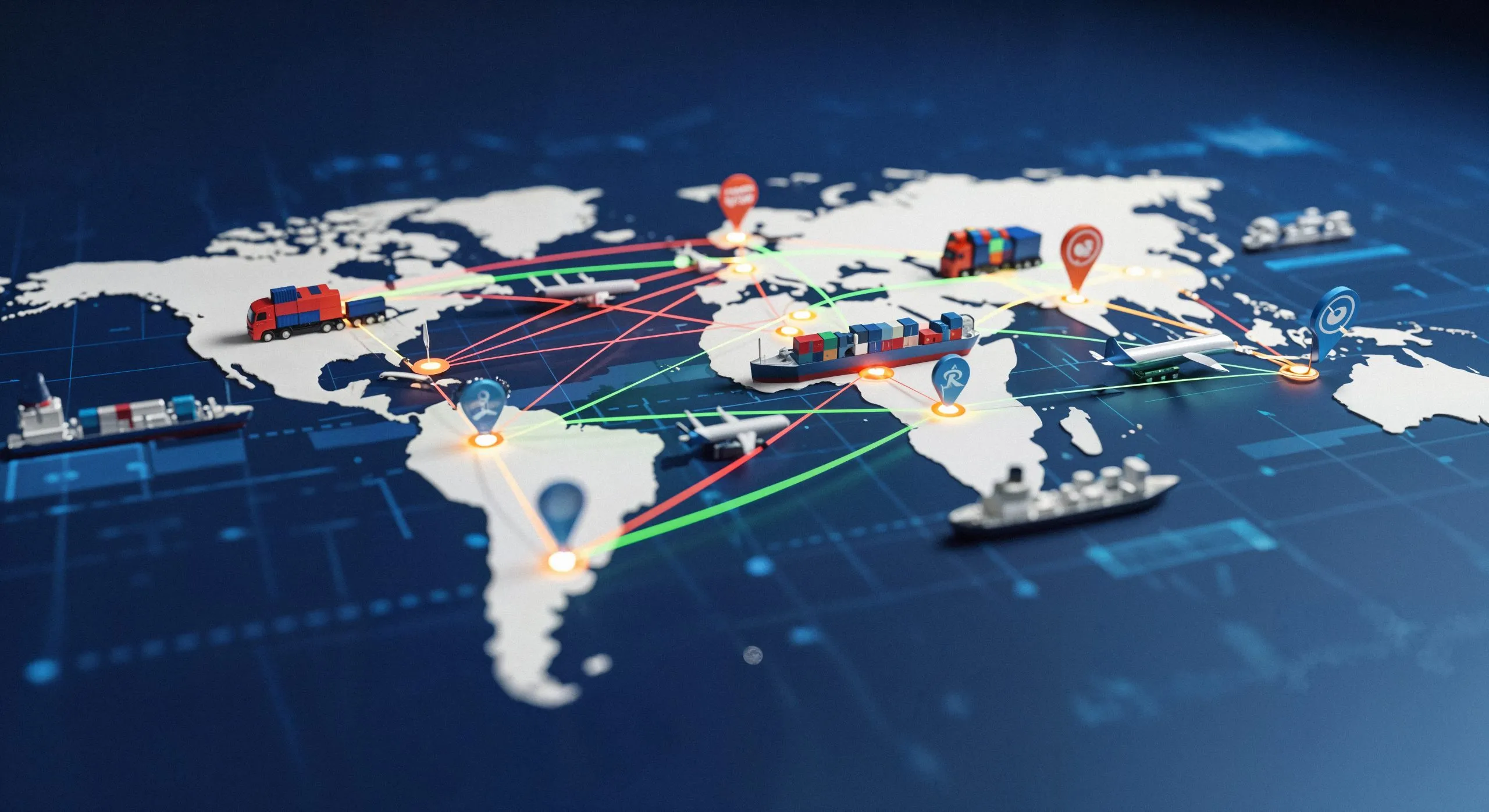
Illustration: GlobalWireNews Editorial
The number of active armed conflicts worldwide is at its highest since the end of the Cold War. Major power competition between the United States, China, and Russia is reshaping the international order built after 1945. For British households, the question is not whether this matters — the effects are already being felt in energy prices, defence spending, and economic uncertainty — but how to understand what is happening and what it means practically.
From Order to Multipolarity: The Structural Shift
The post-1945 international system was built on a set of multilateral institutions — the United Nations, NATO, the WTO, the IMF — designed to manage great-power competition through rules rather than force. That system is under serious strain. The United States has shown growing ambivalence about multilateral commitments. China has grown to the point where it can credibly challenge American primacy across Asia and beyond. Russia has demonstrated willingness to redraw borders by force in Europe.
The result is an increasingly multipolar world where the rules that previously constrained state behaviour are less reliably enforced. This does not make major conflict inevitable — but it does mean that the risk premium on global stability has risen meaningfully, and that events once considered unthinkable have become possible.
The Major Fault Lines
Taiwan and Semiconductor Supply
The Taiwan Strait is the most consequential single flashpoint in the global system. Taiwan produces approximately 90% of the world's most advanced semiconductors — the components that underpin modern electronics, artificial intelligence, and military technology. A conflict, or even a credible threat of conflict, would disrupt global supply chains within weeks. The UK's electronics manufacturing, consumer technology market, and defence procurement are all directly exposed to any sustained disruption in Taiwan's production.
Most Western intelligence assessments place the probability of an imminent Chinese military invasion as low but rising over a decade-long horizon. The more immediate risk is economic and diplomatic coercion — pressure applied short of armed conflict that nevertheless creates significant uncertainty for businesses and governments.
Middle East Energy Routes
Approximately 20% of global oil trade passes through the Strait of Hormuz. Any sustained disruption to shipping in the Gulf — whether through conflict, blockade, or attack on infrastructure — would push oil prices sharply higher. Britain imports the vast majority of the oil it consumes and is exposed to global gas prices through its LNG import infrastructure. An energy price spike of the scale seen in 2022 would have comparable effects on household bills and business costs.
European Security
Russia's ongoing conflict with Ukraine has fundamentally altered the security assumptions that governed Europe since 1991. NATO members have significantly increased defence spending. The UK has committed to raising defence expenditure to 2.5% of GDP — a meaningful increase from current levels — with direct fiscal consequences. Money spent on defence is money not available for the NHS, schools, and infrastructure. This represents a genuine change in British public finances that will compound over years.
How Geopolitical Risk Reaches British Households
The transmission is primarily economic: energy prices, food prices (conflicts disrupt agricultural production in major exporting regions), interest rates (geopolitical uncertainty pushes investors toward safer assets, affecting borrowing costs), and employment in export-dependent industries. Few British households face direct exposure to armed conflict, but virtually all are exposed to its economic downstream effects.
What Historical Precedent Suggests
Periods of elevated geopolitical tension have historically been associated with higher commodity price volatility, more fragmented trade, and greater government intervention in strategic industries. The academic literature on great-power transitions — from scholars including Graham Allison, John Mearsheimer, and Hal Brands — consistently finds that transitions between dominant powers are the most dangerous periods. The evidence also shows that catastrophic outcomes are not inevitable, and that the quality of diplomacy and institutional design matters enormously.
"The question is not whether the international order is changing — it clearly is. The question is whether the transition can be managed without catastrophic conflict."
— Academic consensus on great-power transition riskWhat Individuals and Households Can Reasonably Do
The honest answer is that individuals have limited ability to insulate themselves from major geopolitical events. But financial advisers and risk analysts consistently identify several prudent steps regardless of the specific threat environment: maintaining an emergency fund covering three to six months of essential expenses; diversifying savings across asset classes; investing in household energy efficiency to reduce vulnerability to energy price spikes; and staying informed through reliable sources.
The risks that seem most distant are often the ones worth thinking about precisely because they tend to be under-planned for. The energy crisis of 2022, the pandemic of 2020, and the financial crisis of 2008 all seemed remote before they materialised — and each had profound effects on household finances that better preparation could have partially mitigated.
Editorial Notice
This article provides educational analysis of geopolitical trends and does not constitute investment, financial, security, or professional advice. Geopolitical risk assessments involve significant uncertainty. Readers should consult appropriate professional sources for guidance specific to their circumstances.